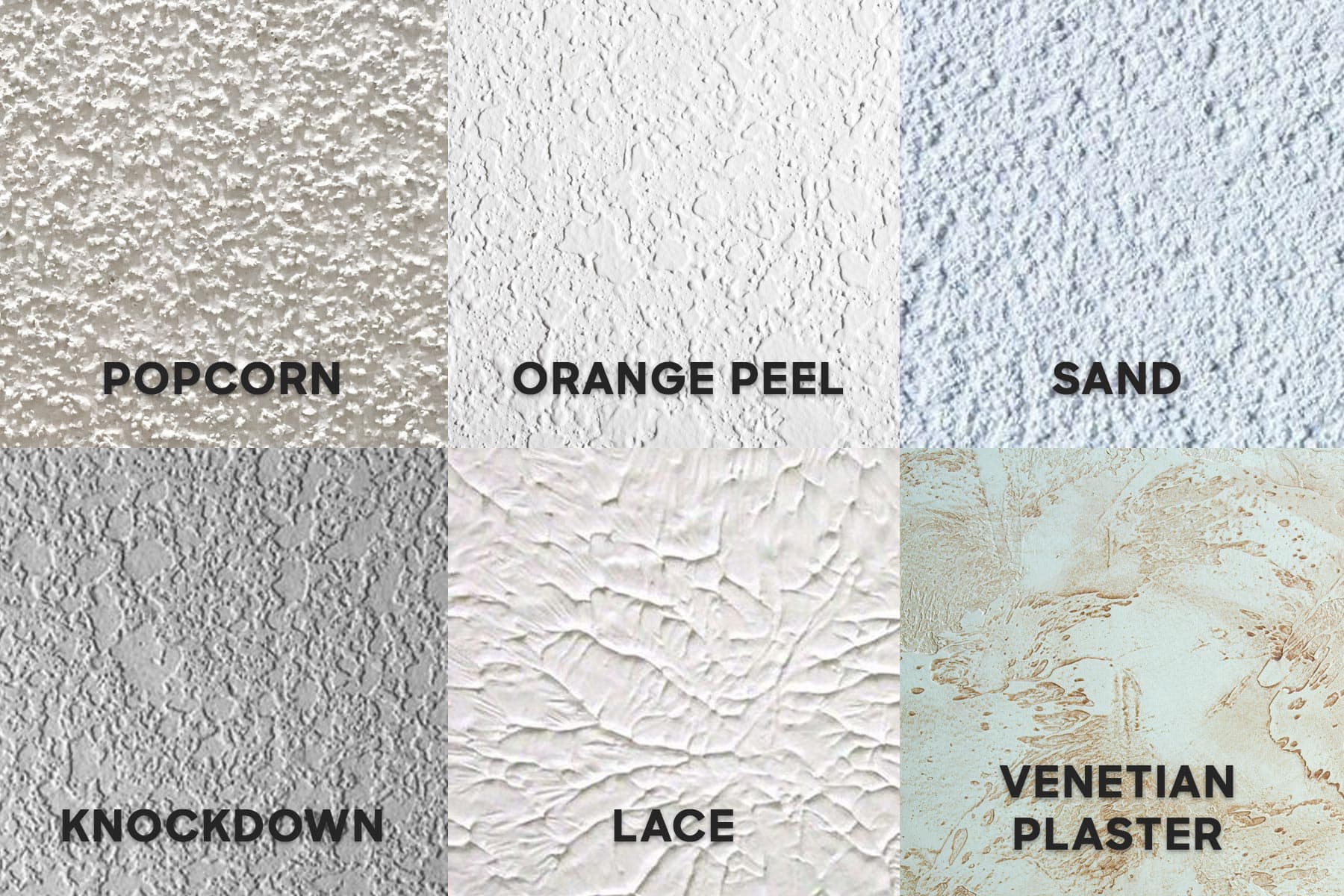
When a Florida water claim damages a textured wall and the work involves redoing the texture after drywall repair, the estimate has to specify which texture. Xactimate provides five distinct line items for drywall texture, plus one add-on. Each describes a different finish technique. Selecting the wrong one is one of the most common — and most easily preventable — reasons textured wall scope gets reduced on carrier review.
This is a short field reference from the WCE estimating team. The codes below are the texture lines under the DRY category in the Xactimate library.
The five texture lines, side by side
| Code | Description | Unit | What it actually is |
|---|---|---|---|
DRY TEX | Texture drywall — light hand texture | SF | Hand-applied texture with a brush, sponge, or roller producing a light, subtle pattern |
DRY TEX- | Texture drywall — machine | SF | Spray-applied texture using a hopper gun. Uniform output, faster application, lower labor |
DRY TEX+ | Texture drywall — heavy hand texture | SF | Hand-applied texture with deeper pattern definition. More material, more labor than light hand |
DRY TEX++ | Texture drywall — smooth / skim coat | SF | A skim-coat finish for smooth walls. Multiple thin passes of joint compound, sanded between coats |
DRY TEXMK | Texture drywall — machine — knockdown | SF | Spray-applied, then troweled flat ("knocked down") while still wet to produce the characteristic knockdown finish |
DRY TEXAD | Add-on cost to mix PVA sealer with drywall joint compound | SF | Not a texture line — an add-on for prep work where PVA sealer is mixed into the compound |
How to choose the right one
The selection rule is simple in principle. Match the line item to the actual texture on the wall — both for the area being repaired and, when matching law applies, for any additional area where uniform appearance is required.
Hand vs. machine. Hand-applied textures (DRY TEX, DRY TEX+) are visibly different from spray-applied textures (DRY TEX-, DRY TEXMK). The patterns aren't interchangeable; a wall finished by hand has a different texture rhythm than one finished by machine, and the eye picks up the difference immediately. If the original wall was hand-textured, machine application as a repair will read as a patch.
Light vs. heavy hand. DRY TEX (light) and DRY TEX+ (heavy) describe a continuum of pattern depth. Light is subtle — often barely visible until light catches it from an angle. Heavy is the deep, sculpted look common in mid-century Florida construction. Walking the wall and looking at the pattern depth is how the choice is made.
Smooth / skim coat. DRY TEX++ is for walls intended to be smooth. The skim coat is a finish, not a texture. Common in modern construction and remodels where the wall reads as flat and unbroken.
Knockdown. DRY TEXMK is the most-used texture in newer Florida residential construction. The knockdown look is unmistakable — a flattened, mottled finish produced by spraying texture and then dragging a wide trowel across it before it sets. Machine knockdown and hand-applied textures don't visually substitute for each other.
Why the wrong selection gets cut
Carrier reviewers compare the texture line item against photographic evidence of the original wall. When the photographs show a heavy hand-texture and the line item specifies DRY TEX- (machine), the substitution is visible. The reduction follows.
The same logic applies in reverse — claiming DRY TEX++ (skim coat) for a wall that was originally machine-textured signals an upgrade rather than a repair, and the carrier reviewer will reduce or reject the line.
The fix is operational. Photograph the existing texture clearly during the inspection — not from a distance, not at an angle that flattens the pattern. Identify which of the five descriptions matches what's on the wall. Select the corresponding line item. Cite matching law where the texture extends beyond the strict damage zone and uniform appearance is required.
Where the add-on fits
DRY TEXAD is the outlier — it is not a texture itself but an add-on cost for mixing PVA sealer into the joint compound. PVA sealer is used to prevent flashing when texture is applied over a freshly finished drywall surface, particularly in areas where the underlying compound has different absorption rates than the surrounding wall. Florida humidity makes flashing a common issue, which is why the add-on is in the library.
When the work involves new drywall that will receive texture, DRY TEXAD belongs on the estimate alongside the texture line. When the texture is being applied over existing finished drywall, the add-on usually doesn't apply.
A short note on photography
The single most useful piece of documentation for defending a texture line item is a clear photograph taken with raking light — light hitting the wall at a low angle, which casts shadows that reveal the texture pattern. A flash-on, head-on photograph flattens the texture and makes every wall look like every other wall. Carrier reviewers can't distinguish between heavy hand texture and skim coat from a flat photograph. They can distinguish easily from a raking-light photograph.
This is the kind of operational discipline that separates estimates that survive carrier review from estimates that don't. The line item codes are the technical layer. The documentation that supports them is the layer that decides whether the line item gets paid.
How we handle this at WCE
Every Florida texture scope we write specifies the matching texture line from the Xactimate library, supported by photographic documentation captured under appropriate lighting. When matching law applies, we document the extension argument before submission. When DRY TEXAD belongs on the estimate, it goes on at intake — not after the carrier has already cut the texture line.
If you have a Florida case where textured wall repair has been challenged or reduced on carrier review, send it for a no-cost review. We'll tell you whether the line item selection matches the wall, and what documentation would close the substitution argument on resubmission.